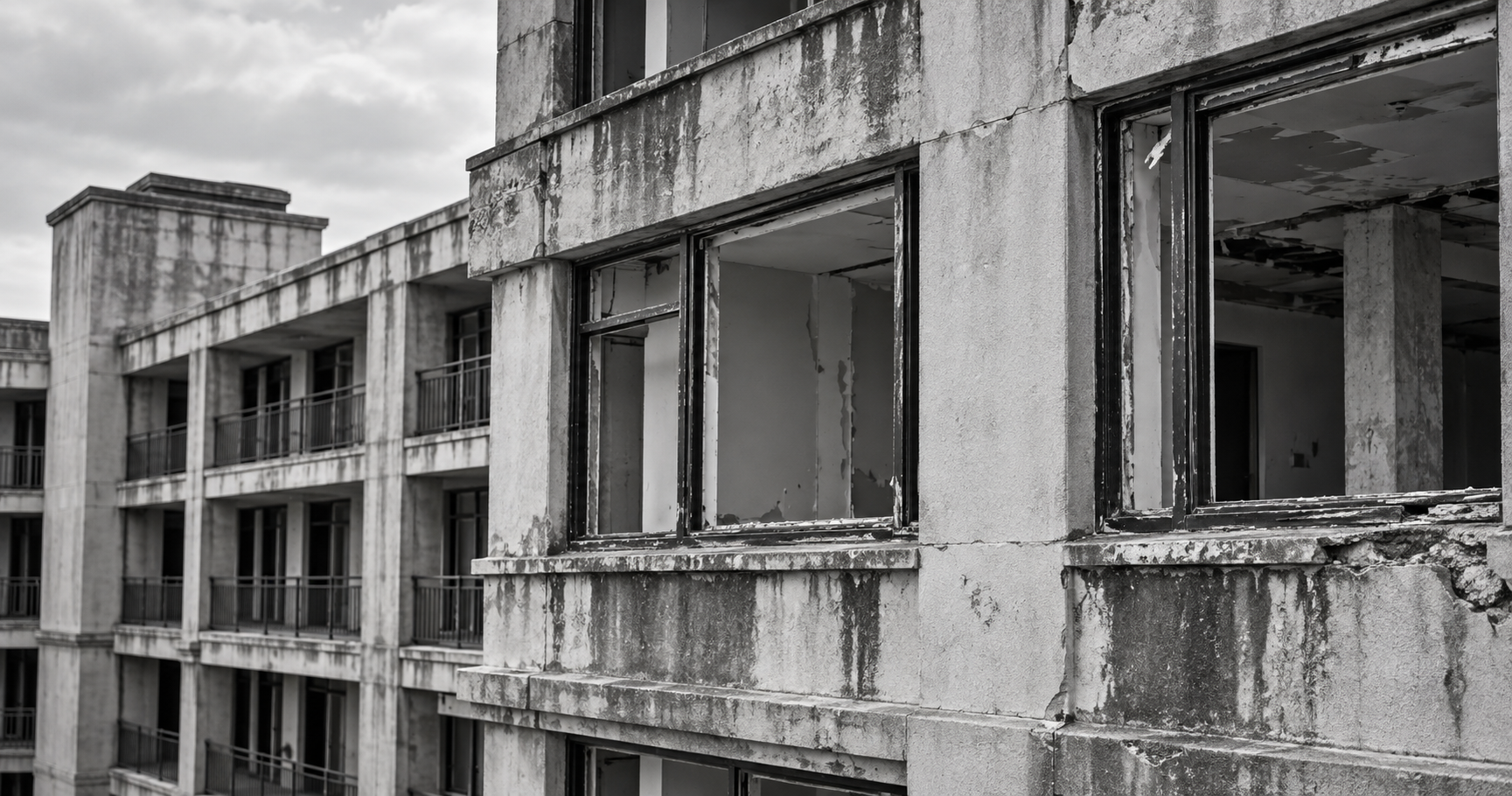
A commercial property falls behind on maintenance. After default, the lender orders an inspection, obtains a substantial repair estimate, and demands payment from the guarantor. The demand labels the property’s condition “waste” and treats that label as a basis for personal liability.
That demand raises two separate questions. Did the borrower commit waste within the meaning of the loan documents? If so, what obligation did the guarantor agree to pay?
Texas law permits waste claims based on negligent preservation of property. But ordinary aging does not automatically become waste, and a waste provision covering the lender’s resulting losses does not automatically expose the guarantor to the entire unpaid loan. The physical evidence and the contract must be examined together.
Start With the Guaranty and Its Incorporated Documents
Read the guaranty, note, loan agreement, and deed of trust before debating the property’s condition. Identify the conduct covered, the person whose conduct triggers liability, and the obligation guaranteed. Pay particular attention to definitions, incorporated provisions, amendments, and any requirement of gross negligence, willful misconduct, or bad faith.
In Fath v. CSFB 1999-C1 Rockhaven Place Ltd. Partnership, 303 S.W.3d 1, 4 (Tex. App.—Dallas 2009, pet. denied), the relevant guaranty covered losses caused by the borrower’s gross negligence or willful misconduct resulting in physical waste. That language requires analysis beyond identifying a maintenance deficiency.
Keep separate maintenance, mold, casualty, and waste provisions separate in the analysis. A repair covenant may impose obligations that differ from the waste carve-out. If the documents separately address waste and deterioration, the lender should identify which provision supplies the claimed personal liability. The guarantor should not concede that every breach of a property-care covenant activates every recourse provision.
Waste Can Include Neglect
The Texas Supreme Court supplied the foundational rule in R.C. Bowen Estate v. Continental Trailways, Inc., 256 S.W.2d 71, 72 (Tex. 1953). Waste involves injury to the reversionary interest caused by the wrongful act of a tenant or another person rightfully possessing the property. The Court expressly stated, “Waste includes injury resulting from failure to exercise reasonable care in preserving the property.”
Although Bowen involved a lease rather than a commercial loan guaranty, its definition supplies an important baseline. Waste can involve affirmative damage or permissive neglect. A guarantor cannot defeat every claim simply by showing that the borrower never intended to destroy the property.
The same opinion recognizes reasonable care and ordinary wear and tear as part of the analysis. The relevant inquiry concerns wrongful injury, rather than whether an older building needs repairs. A contractual definition or heightened culpability requirement must still be addressed.
Ordinary Aging Is Different From Actionable Waste
A useful modern commercial-loan decision is RSS MSBAM2014C17-TX HAH, LLC v. Houston Airport Hospitality LP, No. 01-21-00042-CV, slip op. at 44–47 (Tex. App.—Houston [1st Dist.] Aug. 30, 2024) (mem. op.). The lender sought waste damages involving a hotel’s deteriorating mechanical systems. Because the agreement did not define waste, the court considered common-law principles.
The court explained that waste excludes ordinary wear and tear, depreciation, and equipment that merely reaches the end of its useful life. It upheld the trial court’s rejection of the waste claim, emphasizing conflicting evidence of maintenance efforts and the trial court’s authority to assess credibility.
The procedural posture matters. The decision did not establish that deferred maintenance can never constitute waste. It held that the record did not conclusively establish waste and that the adverse finding was not against the great weight and preponderance of the evidence. Nor did the court reach the lender’s waste-damages issue after rejecting its liability challenge.
For practitioners, the distinction demands an itemized investigation. A replacement estimate should distinguish ordinary expiration of equipment life from additional injury allegedly caused by unreasonable neglect.
The Degree of Deterioration Matters
Other decisions illustrate what stronger waste evidence looks like.
In Fath, 303 S.W.3d at 7–8, the borrower began renovations, and many units remained gutted shells at default. The court held that permission to renovate did not authorize demolition followed by abandonment and found legally sufficient evidence supporting gross negligence and waste. It nevertheless reversed and remanded because the jury question improperly combined those grounds with an unsupported fraud theory. The case supports the sufficiency of the waste evidence; it should not be described as an affirmed damages judgment.
In White v. MLMT 2004-BPC1 Carlyle Crossing, LLC, No. 02-10-00233-CV, slip op. at 6–9 (Tex. App.—Fort Worth Aug. 18, 2011, pet. denied) (mem. op.), witnesses described severe leaks, mold, missing equipment, and long-term neglect that progressively worsened the damage. The court upheld the award based on evidence separating damage beyond normal wear from ordinary deterioration. The cost-of-repair-and-replacement theory itself was not challenged.
These decisions make the operational record important. Preserve inspections, photographs, repair invoices, complaints, and maintenance logs showing what happened, when it happened, and how management responded.
Loss Recourse Does Not Automatically Mean Full Recourse
The decisive distinction may concern the remedy rather than the condition.
In Wells Fargo Bank, N.A. v. MBS–The Hills, Ltd., No. 02-10-00289-CV, slip op. at 9–16 (Tex. App.—Fort Worth Aug. 8, 2013) (mem. op.), the documents limited personal recourse to losses or damages associated with specified exceptions, including waste. The court held that waste triggered liability for resulting waste damages, rather than automatically triggering liability for the remaining note balance.
The lender obtained a judgment against the borrowing entities for the deficiency but failed to prove waste damages supporting the individuals’ liability. The court affirmed the take-nothing judgment for the individuals.
For a loss-based provision, therefore, the lender must connect its requested recovery to the covered waste. A deficiency calculation alone does not supply that connection. Different language expressly making the entire debt recourse requires a separate analysis; the holding should not be generalized to every guaranty.
Use the substituted 2013 opinion. It withdrew the earlier opinion and denied the motion for en banc consideration.
Investigate Casualty Damage and Control of Repair Funds
An unrepaired roof after a storm presents different questions from a roof deliberately stripped of its materials. Investigate the source of the condition, the borrower’s response, and the contract’s allocation of restoration duties and funding.
Review insurance payments, lender-held reserves, disbursement requests, release conditions, lender responses, contractor availability, and any applicable notice or cure provisions. Separate the original casualty injury from any additional deterioration allegedly caused by a failure to protect the property afterward.
Lender control of funds is an evidentiary issue to investigate, rather than an automatic defense. Determine whether the borrower satisfied release conditions and whether withholding funds actually caused the injury at issue. Likewise, do not assume that a guarantor possesses a cure right merely because the borrower has one elsewhere in the documents.
Build the Defense Around Conditions and Dollars
A useful review should answer five questions:
- What exact language defines the waste trigger and the guarantor’s obligation?
- Which conditions exceed ordinary wear, aging, or preexisting damage?
- What evidence connects those conditions to the covered person’s conduct and required degree of fault?
- How do casualty provisions, repair funding, consent, and applicable cure rights affect the claim?
- Does the clause cover resulting losses or the entire debt, and what evidence supports the requested amount?
Build a condition-by-condition damages schedule. For each item, identify its baseline condition, cause, repair scope, and claimed loss. Ask the expert to distinguish restoration from upgrades and to explain any allocation for age or ordinary deterioration. Preserve evidence before repairs change the property.
Waste can create serious personal exposure. The strongest assessment begins with the signed documents and tests each claimed injury against the actual record. A distressed property and an unpaid loan establish the setting for the dispute. The waste trigger and the promised remedy determine the guarantor’s exposure.
Discuss a commercial real estate guaranty dispute.
Related reading: Guaranty Agreements in Texas and Bad Boy Carve-Outs and the Obligations You Guaranteed.
Matthew M. Clarke is a shareholder at Kelley Clarke, PC and Chair of Litigation. He represents borrowers, guarantors, and investors in commercial real estate disputes. This article is for informational purposes only and does not constitute legal advice. Reading it does not create an attorney-client relationship.